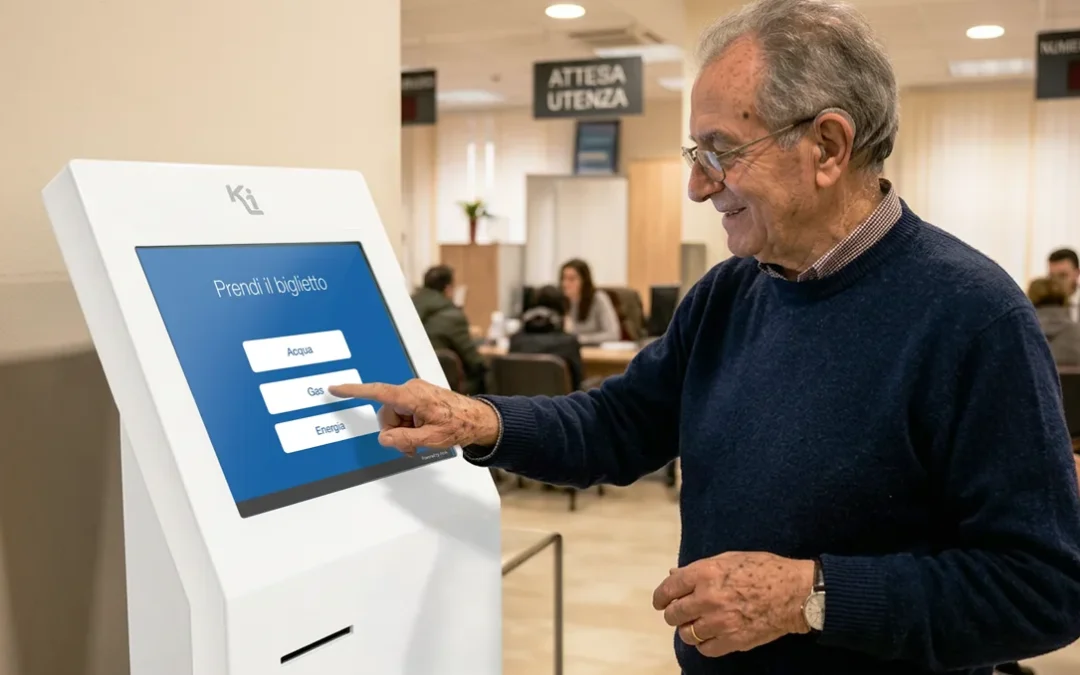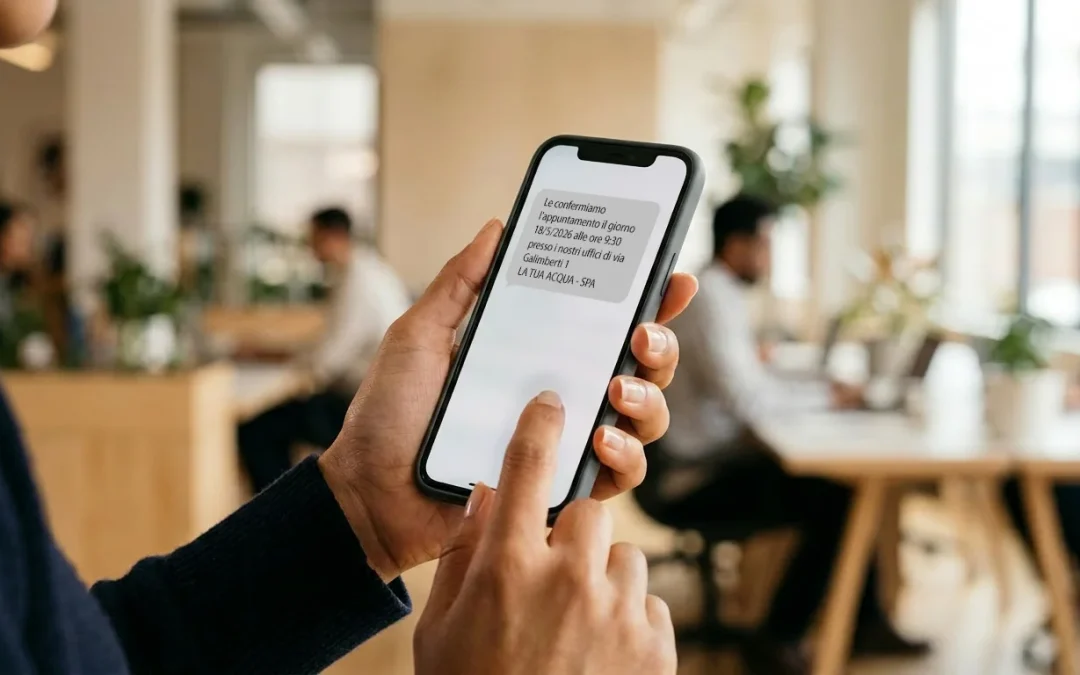

The absence of an online booking system is one of the main causes of frustration for customers who expect a professional and organized service, and who often find themselves having to face long waits, both on site and on the phone.
Many businesses, such as insurance agencies, dental practices, beauty centers, hairdressers, car dealerships, showrooms, fitness centers and consultancy services, neglect a crucial aspect of the user experience: time management.
Without an effective booking system, accessible online and wherever they are, waits build up, causing dissatisfaction, economic losses and damage to their image that is difficult to recover from.
Sectors adopting online booking


Managed with Kiosk Buk — 24/7 online booking, automatic reminders, zero phone calls
The problem of waiting: a brake on the customer experience
For many businesses, it is still common practice to let customers show up in person and wait their turn, or to call to find an available slot.
This approach, in addition to being inefficient, does not meet the expectations of those who today are used to managing everything with a few clicks.
Long waits in small rooms and phone calls to get a free line and book a service are seen as a waste of time and a sign of backwardness.
In an era in which digital dominates everyday life, customers expect immediate access, quick bookings and a frictionless experience. Not adapting means penalizing the business and losing opportunities.
According to a report by McKinsey & Company, 75% of customers who have a negative experience with a company change suppliers without thinking twice.
Shep Hyken, customer experience expert, says: “Companies no longer compete only on the quality of the product or service, but on the quality of the experience they offer. And waiting time is one of the most critical variables.”
Customer journey: a path that must not stop in line
In the customer journey, every touchpoint counts. From online information to booking an appointment, to the use of the service, everything must be fluid and intuitive.
DATA
Gartner highlights that 64% of customers consider the experience more important than the price.
A Forrester study says that reducing friction in the customer journey can increase loyalty by up to 35%.
If a customer is forced to physically show up, wait hours or go through a complicated process, the company has already lost a fundamental point in the customer journey.
How can you avoid being penalized in this scenario of strong change?
The backwardness of current systems: why do-it-yourself methods don’t work
Many companies and offices still manage reservations with Excel spreadsheets, phone calls or messages scattered across various social channels, or worse, with the classic “first come, first served” method.
These methods are not scalable and generate operational chaos.
Negative effects of a botched system
- Irritated and dissatisfied customers
- Increased negative word of mouth
- Loss of internal efficiency and stress for employees
- No possibility to optimize the workflow
The value of an online booking platform
Implementing an advanced solution allows you to eliminate the problem at the root. A digital booking system not only reduces waiting times, but also improves brand perception and optimizes company resources.
Concrete benefits:
- Reduction of waiting times and intelligent appointment management
- Real-time flow monitoring
- Automation of customer communications
- Integration with CRM and other business systems for more effective management
Bill Gates said: “Companies that do not digitally transform are destined to lose customers.”
A Harvard Business Review report shows that companies with a seamless customer experience see a 10-15% increase in sales.
Online booking in the medical and healthcare sectors: it’s not optional
Doctors’ offices, specialist clinics, analysis laboratories, physiotherapy centers, and dental clinics share a structural problem: appointment management is still reliant on phone calls, paper calendars, or the classic “come back tomorrow.”
The result? Patients waiting on line for minutes, overloaded reception desks, poorly optimized slots, and—in the worst cases—appointments missed without notice, creating gaps in the schedule and direct financial losses.
DATA
- 34% of patients choose a new doctor or specialist based on the ease of booking online (Accenture Health).
- Practices that adopt a digital booking system reduce no-shows (missed appointments) up to 40% thanks to automatic reminders.
- The average practice receptionist dedicates over 2 hours to day spent solely managing appointments over the phone—time taken away from welcoming patients and ensuring quality service.
In healthcare, online booking isn’t just about convenience: it’s about trust. A patient who finds a digitally organized practice perceives greater professionalism even before walking in the door. Conversely, a poorly managed schedule—with overlapping errors, unpredictable wait times, or the inability to book outside of office hours—is one of the main reasons for abandonment and negative reviews.
A system like Kiosk Buk allows the practice to make slots available directly online, receive automatic confirmations, send reminders to patients, and manage cancellations in real time—without manual intervention. The result is a consistently optimized schedule and a patient experience that starts positively even before the visit.
Public and municipal services: online booking as a citizen’s right
Municipal offices, registry offices, tax offices, local health authorities (ASL), employment agencies, INPS offices, municipal waste or water management companies—these are all places where citizens still show up with a number in hand, often after waiting weeks for an appointment communicated by phone or posted on a noticeboard.
The paradox is evident: the very facilities that should guarantee a universal and accessible service to all are often the most backward in access management. Lines at physical offices, mornings wasted waiting, and congested phone lines represent an enormous social cost—paid in terms of citizens’ time and the productivity of the institutions themselves.
SECTOR DATA
- In Italy, the average citizen wastes an average of 46 hours a year waiting at public offices and counters (ISTAT, BES Report).
- Public bodies that have adopted digital appointment booking systems have reduced average counter waiting times by 55-70% (Digital Agenda Observatory, Polytechnic University of Milan).
- The 68% of citizens say they would prefer to book an appointment with a public office online rather than physically visit a counter without guaranteed times (Eurobarometer Digital Public Services).
The digitalization of public counters is no longer a matter of optional modernity: it is a requirement for efficiency and inclusion. An online booking system allows the institution to distribute access flows throughout the day, eliminate physical queues, reduce staff dedicated solely to attendance management, and—an often overlooked aspect—collect valuable data on peak demand to optimize internal organization.
For municipal companies that manage public counters—from water utilities to waste collection—digital booking reduces the number of unnecessary visits by filtering requests in advance by type and directing citizens to the correct channel: physical counter, call center, or online self-service.
With a solution like Kiosk Buk, public service counters can activate a booking system accessible from any device, with confirmations via SMS or email, priority management for vulnerable groups, and real-time flow monitoring—transforming a daily friction point into a service experience that respects citizens’ time.
For institutions with high-traffic physical counters, online booking is only the first level of the solution. Citizens arriving at the office after booking still need to be greeted, directed, and managed in an orderly manner—especially in larger facilities where multiple counters operate simultaneously on different types of procedures.
This is where online booking integrates with physical queue management. Kiosk Hydra is the enterprise queue management system that completes the citizen journey: those who have booked with Buk arrive, register at the reception kiosk, and are called to the right counter at the right time—without disorganized lines, without confusion, without staff dedicated solely to sorting access.
The Buk + Hydra integration transforms the public counter into a fully orchestrated flow: digital booking before the visit, intelligent attendance management upon arrival. The result is measurable—less stress for staff, less waiting for the citizen, more procedures handled on the same day.
Hotels, restaurants, and tourist facilities: the moment of booking is already part of the experience
In the tourism and hospitality industry, booking isn’t a bureaucratic formality: it’s the first moment of emotional connection between the customer and the establishment. Hotels, B&Bs, agritourisms, restaurants, and wellness centers that still force customers to call, email, or—worse—show up in person to check availability are losing real-time bookings to more digital competitors.
The contemporary traveler often books at times when no one answers the phone: late at night, on weekends, during a trip. If they don’t find an immediate and functioning booking system at that time, they look elsewhere. And they find one.
INDUSTRY DATA
- 70% of online bookings in the hospitality industry take place outside of business hours (Booking.com Industry Report).
- Properties that manage reservations internally via a digital system save an average of 15-20% in commissions compared to OTAs like Booking.com or Airbnb.
- A booking process that requires more than 3 clicks reduces the conversion rate of the 50% (Google Travel Insights).
For hotels and hospitality businesses, the issue isn’t just about the room: it’s about the entire guest journey. The ability to book spa treatments, dinners at the on-site restaurant, transfers, or local experiences online—all in a single interface—transforms a simple reservation into a valuable experience in advance. Those who don’t offer this leave significant revenue on the table.
For restaurants, online booking reduces physical waiting times, allows for precise shift management, and dramatically reduces last-minute empty tables. With an integrated system like Kiosk Buk, the business can manage availability, prompt guests to confirm, and collect preferences—building a relationship before they even arrive.
Lawyers, accountants, and consultants: online booking as a sign of professionalism
Professionals who work directly with the public—law firms, accountants, employment consultants, notaries, architects, insurance agencies—have a unique relationship with time: they are billed by the hour, and every minute spent scheduling appointments is a minute lost from valuable work.
Yet, many of these firms still manage their schedules by phone, with the answering machine acting as a bottleneck. Clients who call and receive no answer, or who have to call back three times to find a free slot, perceive disorganization—regardless of the quality of the advice received.
INDUSTRY DATA
- 42% of professional firm clients say that the ease of scheduling an appointment influences their initial choice (Clio Legal Trends Report).
- Professional firms that adopt a digital booking system reduce administrative time by 35%, freeing up resources for high-value activities.
- 60% of clients prefer to book professional services online, too — the The percentage rises to 80% in the under-45 age group (Salesforce State of the Connected Customer).
For a professional practice, offering an online booking system isn’t just a matter of efficiency: it’s positioning. It means communicating that the practice respects the client’s time, that it’s organized, and that it works with modern tools. In a market where trust is built even before the first meeting, this detail makes a difference.
A system like Kiosk Buk allows the practice to display availability, receive independent bookings from clients 24/7, send automatic reminders, and collect preliminary information about the consultation subject—reducing onboarding time and increasing the quality of the first appointment.
Sports, nature, and leisure: online booking as the new standard
There’s a sector that until a few years ago never felt the need for a booking system, and that is now adopting it with increasing rapidity: the sports facilities, mountain refuges, and nature areas with restricted access.
Soccer and tennis courts, padel clubs, multipurpose sports centers, and seaside resorts have discovered that managing reservations via WhatsApp or phone calls generates conflict, double bookings, and unsustainable time management for facility managers. Customers, for their part, want to know in real time if the court is available—and book it in thirty seconds on their phone, perhaps late at night after work.
On the nature front, the phenomenon is even more interesting. Alpine refuges, heavily trafficked trails, and prized lakes and valleys are introducing mandatory reservation systems for access—often with a nominal fee that contributes to the maintenance of the area. What was once free access is becoming a curated experience, with controlled flows, less overcrowding, and a significantly higher quality of visit.
SECTOR DATA
- 65% of regular visitors to sports facilities say they prefer booking online to calling, especially in the evenings and on weekends (Sport England, Active Lives Survey).
- Refuges and natural areas that have introduced mandatory reservations have seen a 40-60% reduction in overcrowding and an increase in visitor satisfaction (CAI data and European analyses of areas protected).
- The ability to directly monetize bookings—even with minimal access fees—generates a new source of revenue for many properties that covers management and maintenance costs.
For a sports club or facility manager, the reservation system solves three problems in one fell swoop: it eliminates manual slot management, reduces no-shows thanks to automatic reminders, and provides a clear, real-time overview of occupancy. For a refuge or natural area, it also becomes a tool for environmental protection—because restricting access in an organized manner means preserving what makes those places special.
With a solution like Kiosk Buk, even small facilities can implement a professional reservation system, with automatic confirmations, availability management, and booking fee collection—without the need for a dedicated secretary.
The cost of absence: a comparison by sector
| Sector | Main issue without digital reservation | Direct impact |
|---|---|---|
| Medical / Healthcare | No-show, overloaded reception, agenda not optimized | Loss of billable slots, operational stress |
| Public services and PA | Physical queues, clogged phone calls, unplanned access | 46 hours/year lost per citizen, organizational inefficiency |
| Tourism / Hospitality | Unmanaged out-of-hours bookings, dependence on OTAs | High commissions, customers lost at night or on weekends |
| Professional services | Secretary services as Bottleneck, perceived disorganization | High administrative time, negative first impression |
| Sports, nature, and leisure | Manual slot management, overcrowding in natural areas | Double bookings, lack of access monetization |
Booking Systems and Customer Journey
Implementing a booking system is not only a matter of operational optimization, but also a significant step in improving the Customer Journey
The customer journey is the path that a customer takes, from the initial awareness of a product or service to post-purchase and beyond.
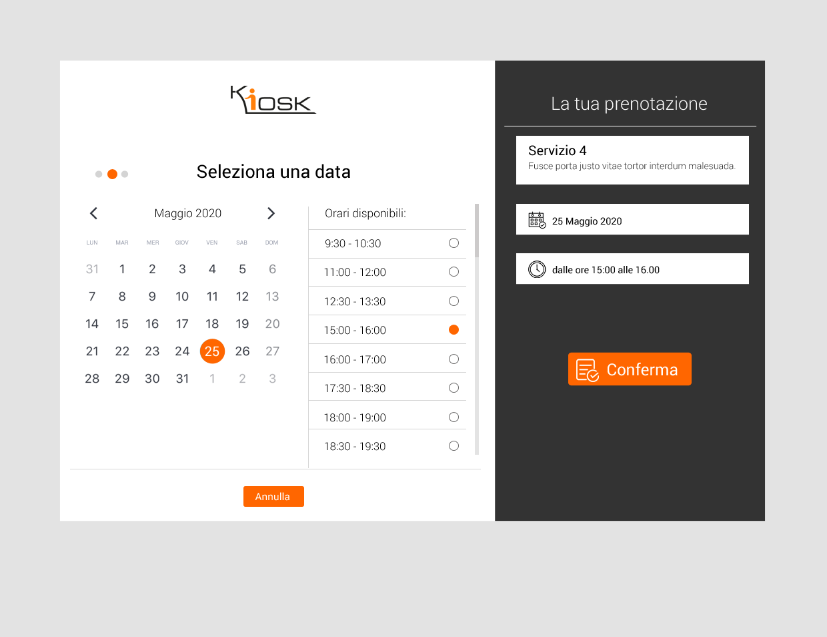 Integrate a booking system such as Kiosk Buk offers numerous advantages in the customer journey. First of all, it significantly simplifies the process of interacting with the service or business, reducing the customer’s efforts in planning and using a service. The ease of booking online translates into a more pleasant experience for the customer, increasing the likelihood that they will return in the future.
Furthermore, online booking allows for greater customization of the customer journey. With the ability to choose specific times, personalized services or preferred seats, a tailored experience is created that meets individual needs. This customization not only improves customer satisfaction, but also helps build a stronger relationship between the customer and the company.
The customer journey is a continuous cycle, and a well-implemented booking system can play a fundamental role in every phase. From initial awareness through research and booking to post-service, careful management of touchpoints positively influences the customer’s overall perception of the company.
In short, the reservation system becomes a key element in designing a memorable customer journey, turning every interaction into a step towards customer loyalty and long-term success.
Economic impact: how much does it cost NOT to have a reservation system?
Not adopting an effective solution means suffering direct and indirect economic damage. Losing dissatisfied customers is only part of the problem. Every negative experience generates a domino effect of negative reviews, unfavorable word of mouth and loss of credibility.
Hard data:
- 32% of customers stop buying after just one negative experience (PwC).
- An unhappy customer tells an average of 9 people, while a satisfied customer tells only 3 (American Express).
- Implementing a reservation management system increases retention by 25% and reduces operating costs by 30% (Deloitte).
Bottom line: doing nothing is no longer an option
Adopting an advanced reservation system is no longer a luxury, but a necessity. Companies that ignore this transformation put their competitiveness and customer loyalty at risk.
As Jeff Bezos said: “Customer obsession is the key to success. And those who don’t put it first are doomed to fail.”
For those who want to ensure a frictionless experience for their customers, it’s time to act.
Who will win the customer experience challenge? Those who innovate. Who will lose? Those who ignore change.
 |
Give your customers the service they expect.Don’t wait for a frustration to become a negative review or a loss of customers. Book a live demo of Kiosk Buk and discover it in detail. |
|
Offer your customers the service you want they wait.Don’t wait for a frustration to become a negative review or a loss of customers. Book a live demo of Kiosk Buk and discover it in detail.
|