No-shows aren’t bad luck: they’re a structural problem that requires structural solutions. In this article, we look at the real causes of no-shows, calculate their actual cost across different sectors — from restaurants to water, gas and energy customer service centres — and explore practical strategies that can reduce missed appointments by up to 40%, without having to chase customers by phone.
What is a no-show and why is it a real problem?
A no-show occurs when a customer, patient or citizen books an appointment, a table or a visit to a service centre and then fails to attend — without cancelling or giving notice. It is far from unusual: no-shows are a recurring issue across virtually every sector that manages appointments, in both private and public services.
Average no-show rates vary depending on the context:
- Healthcare and medical services: between 10% and 30% of appointments, with rates reaching 34% for first visits (source: studies published on PubMed, 2024–2025). A retrospective study of 120,000 appointments at healthcare facilities in Northern Italy found an average no-show rate of 5.1% even in well-organised settings — with a 1% increase for every additional day between booking and the appointment.
- Public services, government offices and utilities (water, gas and energy): specific no-show data is not systematically collected, but the phenomenon is structural. Unplanned visits — users arriving without an appointment or booking and then failing to attend — create unpredictable queues, inefficient staff allocation and longer waiting times. In Italy, waiting in queues costs the average citizen 46 hours per year (ISTAT, BES Report). Multi-utilities that have introduced digital booking systems have reduced average waiting times at service counters by 55–70% (Digital Innovation Observatory, Politecnico di Milano).
- Restaurants: in Italy, the average no-show rate is 12.8% (Incrementoo Observatory, 2025), with peaks of 15.75% among customers joining physical queues. Telephone bookings fall to 1.58%, while bookings made through Google Maps reach 4.09%.
- Professional services (law firms, accountants and consultants): between 10% and 15%, with a direct impact on billable time.
The problem is not only financial. Every no-show creates a domino effect: the reserved slot cannot be reassigned, staff are left waiting, and other users who could have taken that slot remain on the waiting list longer than necessary — sometimes for weeks.
Why customers miss appointments
Before choosing a strategy, it is worth understanding the real causes. They are not all the same, and they do not all require the same solution.
1. Forgetfulness
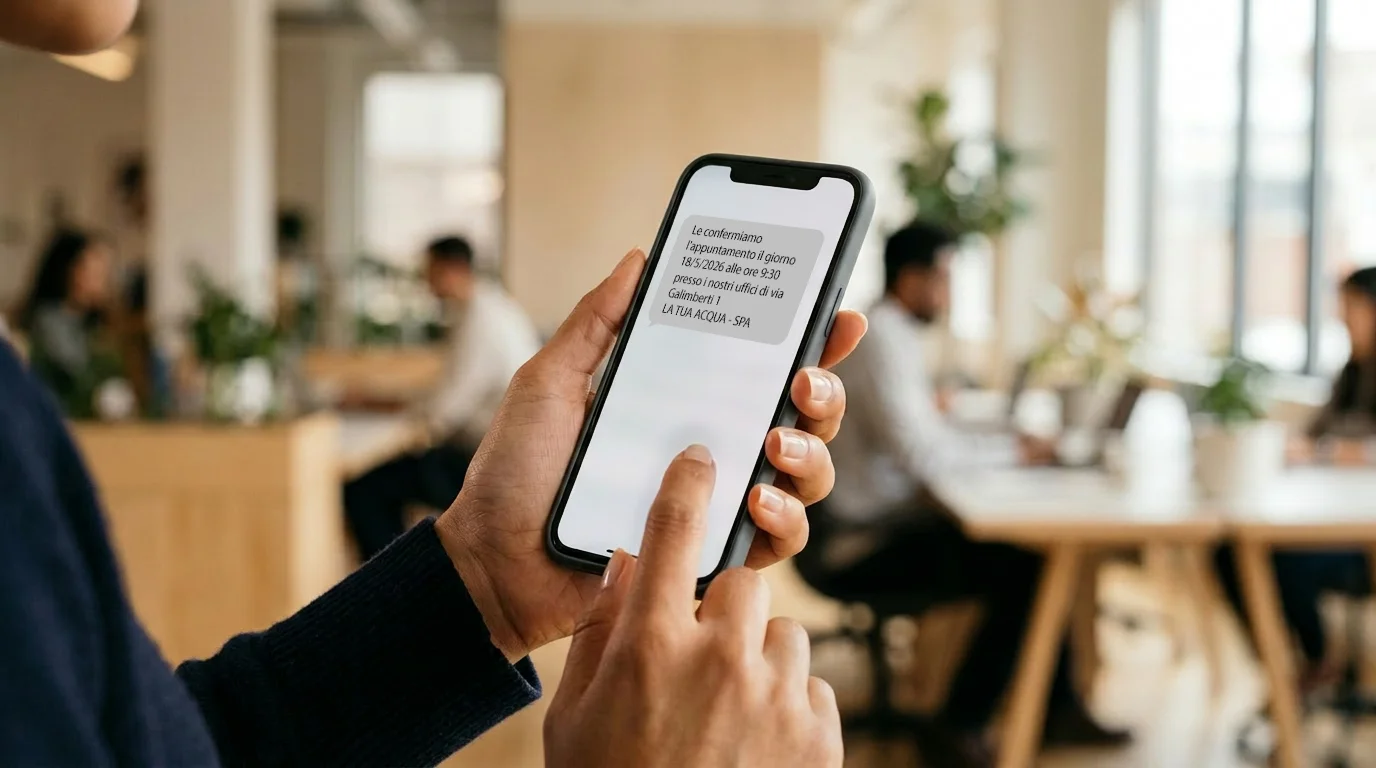
This is the most common cause, especially when days or weeks pass between booking and the appointment. The solution is straightforward: automatic reminders. No phone calls are required — an SMS or email sent at the right time is enough.
2. Change of plans without cancellation
The customer has an unexpected change of plans but does not notify the organisation, often because cancelling is inconvenient or they do not know how to do it. The solution is to make cancellation extremely easy. Paradoxically, lowering the barrier to cancellation reduces no-shows because it increases explicit cancellations, allowing the slot to be reassigned.
3. Booking multiple providers “just in case”
This is common in healthcare and restaurants: customers book several alternatives and make their final choice at the last minute. One solution is mandatory confirmation 24–48 hours beforehand, requiring the customer to make an active choice.
4. The perception that there are no consequences
If missing an appointment has no cost or consequence, some customers will feel less committed to attending. In high-value contexts — such as fine-dining restaurants, specialist practices and professional consulting — tools such as credit card pre-authorisation or deposits can significantly change customer behaviour.
The real cost of no-shows: how to calculate it for your business
Before investing in a solution, it makes sense to quantify the problem. The basic formula is simple:
= number of missed appointments per week × average appointment value
Some practical examples:
| Sector | Average no-show rate | Example annual loss |
|---|---|---|
| Medical practice / specialist | 10–30% | 20 slots/day × 20% × €80 = ~€46,000/year |
| Medium-sized restaurant | 12.8% Italian average | 20 bookings/day × 2% = ~€15,750/year |
| Professional practice | 10–15% | 8 consultations/day × 12% × €150 = ~€44,000/year |
| Beauty salon / hairdresser | 8–15% | 12 appointments/day × 10% × €60 = ~€15,000/year |
The figures vary depending on the context, but the conclusion remains the same: the cost of doing nothing is considerably higher than the cost of implementing a structured solution.
6 practical strategies to reduce no-shows
1. Automatic reminders: the first and most effective tool
According to data from the Incrementoo Observatory covering more than 212,000 bookings, automatic reminders via SMS, WhatsApp or email reduce missed appointments by 32%. The optimal approach involves two reminders: one 48 hours before the appointment and another two hours beforehand. The first acts as a reminder; the second reinforces the intention to attend.
The key is that the reminder should include a direct link to confirm or cancel — without requiring phone calls or complicated login procedures.
2. Mandatory appointment confirmation
Asking customers to explicitly confirm — by clicking a link or replying to a message — creates a small commitment that can significantly increase attendance rates. Customers who fail to confirm within a defined period can be contacted, or their slot can automatically be released to the waiting list.
3. Make cancellation easy
It may seem counterintuitive, but the easier it is to cancel, the fewer genuine no-shows there are. A customer who can cancel with a single click is more likely to do so than simply disappear. The slot then becomes available in time to be reassigned, turning a certain loss into a recoverable opportunity.
4. Automated waiting lists
When managed by an automated system, every cancellation becomes an opportunity: the newly available slot can immediately be offered to customers on the waiting list without manual intervention. Some 57% of Italian restaurants have already adopted digital waiting lists integrated with automatic notification systems (Incrementoo Observatory, 2025). Adoption remains lower in healthcare and professional services — precisely where the economic impact could be greater.
5. Deposits or pre-authorisation for high-value appointments
For high-value bookings — specialist medical appointments, professional consultations, fine-dining restaurants and premium beauty treatments — requiring a deposit or credit card pre-authorisation is one of the most effective strategies. Italian restaurants that introduced deposits or pre-authorisation reduced their no-show rate from 12.8% to 5.4% — almost halving it (Incrementoo Observatory, 2025). The average deposit is €20 per person.
Cultural resistance to this practice still exists, but it is declining. Consumers already pay in advance for flights, trains, concerts and hotels without hesitation. Professional appointment booking is moving in the same direction.
6. Monitor repeat no-shows
Not all customers behave in the same way. A small percentage — often less than 10% of users — accounts for a large proportion of no-shows. TheFork, for example, introduced a policy in 2024 to suspend accounts accumulating more than four no-shows in a year. During the first two months of 2025, the overall rate fell from 3.6% to 3%, resulting in an estimated €4.3 million in annual recovered revenue for Italian partner restaurants. Tracking behaviour and managing repeat cases is an often underestimated but effective strategy.
The role of booking systems in preventing no-shows
The six strategies described above have one thing in common: they only work systematically when supported by a booking system that performs them automatically, without relying on manual intervention by staff.
An Excel spreadsheet does not send reminders. A telephone receptionist cannot manage waiting lists in real time. An integrated digital booking system — such as Kiosk Buk — automatically handles all these processes: scheduled reminders, mandatory confirmations, easy cancellations, dynamic waiting lists and collection of no-show data by time slot and user.
Studies of healthcare organisations adopting integrated digital systems have documented reductions in no-shows of up to 40% — with a direct impact on appointment scheduling, revenue and the quality of the customer experience.
To learn more about choosing the right solution for your organisation, read how to choose a booking system: the features that really matter.
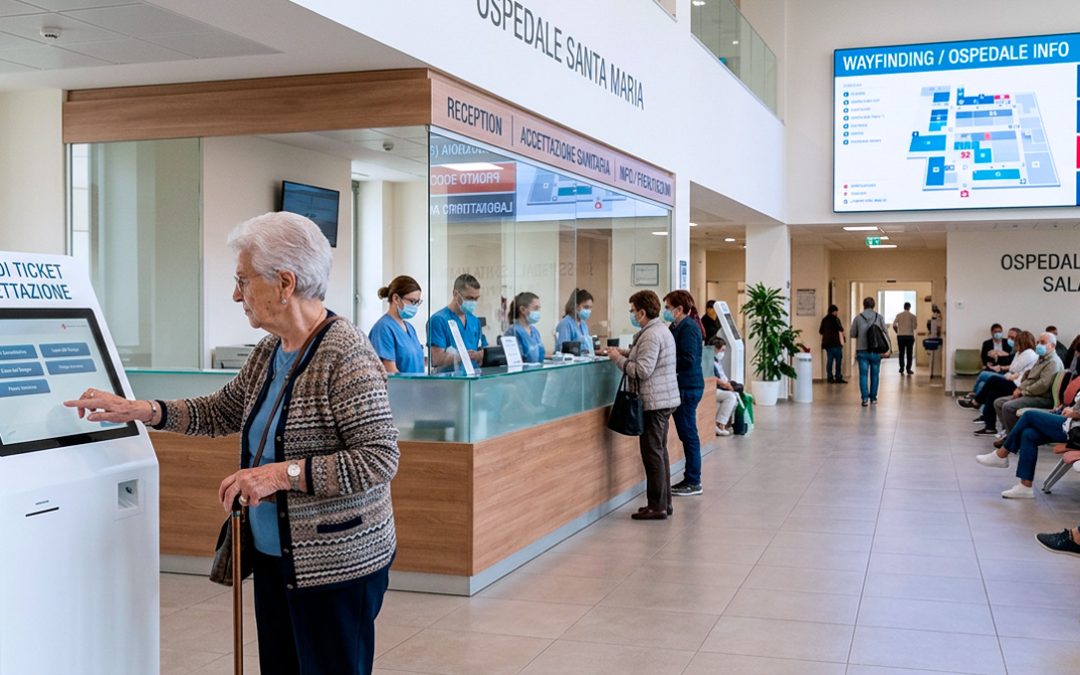
No-shows in healthcare: a special case
In healthcare, no-shows have a double cost: financial and clinical. A missed appointment is not simply a lost billable slot — it is also a patient delaying a diagnosis, examination or treatment. In a healthcare system where the national average waiting time for a specialist appointment exceeds 100 days (PNLA data, January–May 2025), every unused slot carries significant consequences.
The data is clear:
- 34% of patients choose a doctor or specialist partly based on how easy it is to book online (Accenture Health).
- Practices adopting a digital booking system can reduce no-shows by up to 40% through automatic reminders.
- Every additional day between booking and the appointment increases the probability of a no-show by 1% (retrospective study of 120,000 appointments, ASL Turin, 2025).
- A receptionist in an average medical practice spends more than two hours a day managing appointments by phone alone.
A system such as Kiosk Buk allows practices to make appointment slots available directly online, receive automatic confirmations, send reminders to patients and manage cancellations in real time — without manual intervention. The result is a consistently optimised schedule and fewer hours spent by reception staff managing appointments.
No-shows at utility customer service centres: water, gas and energy
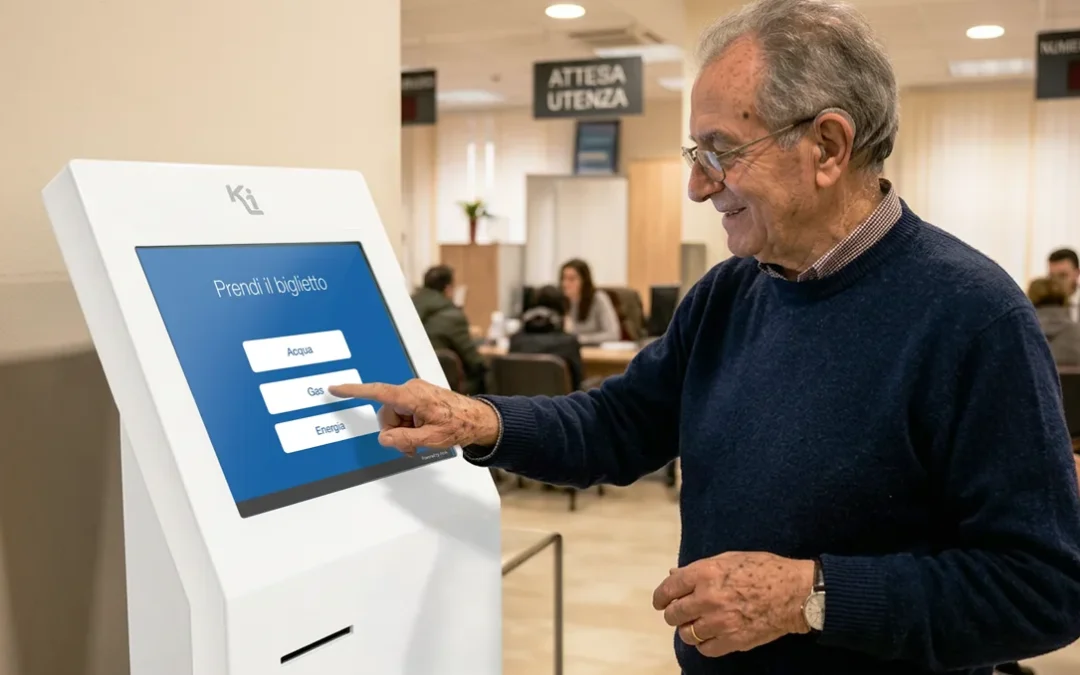
Water companies, gas providers and electricity multi-utilities — more than 1,000 local public service companies in Italy — operate physical customer service centres handling requests such as account transfers, new connections, complaints, payment plans and technical services. It is a huge sector, spread throughout the country, with one structural problem in common: appointment management is still often based on phone calls, physical queues and manually managed calendars.
No-shows in this context have specific characteristics that can make them more costly than in other sectors:
- Different services require different amounts of time and resources. An account transfer may take 10 minutes, while a complex new connection can require an hour. A no-show for a complex appointment can leave a specialised resource unused for a significant period, with little opportunity for immediate recovery.
- Demand is concentrated around predictable but often poorly managed peaks. Year-end periods, billing deadlines and seasonal faults can cause substantial variations in customer flows. Without real-time data, allocating staff efficiently becomes extremely difficult.
- The customer base is inherently diverse. Older people, businesses, users with limited digital skills and foreign customers all need access to services. Booking systems must therefore be accessible to different user profiles; otherwise, a significant proportion of customers will continue to arrive without appointments, generating queues.
The most advanced Italian multi-utilities have already started digitalising their customer service operations by introducing online booking, remote video service desks and access management systems. These projects share the same objective: reducing unplanned visits, optimising staff time and improving the experience of customers who visit physical service centres.
However, booking is only part of the process. What happens when the customer arrives is equally important. Someone who has booked online expects to be recognised, directed to the correct service desk and called at the appropriate time — not to find themselves in the same disorganised queue as if they had never booked. This is where digital booking needs to integrate with physical queue and customer flow management.
The combination of Kiosk Buk for online booking and Kiosk Hydra for physical queue management allows utilities and multi-utilities to orchestrate the entire customer journey: from booking an appointment at home to arriving at the service centre, with automatic reminders that reduce no-shows, kiosk check-in, routing according to service type and real-time dashboards showing daily customer flows. The results are measurable: fewer wasted slots, shorter queues for customers and less pressure on front-office staff.
Conclusion: no-shows can be reduced, not eliminated. But the difference is measurable.
Eliminating no-shows completely is impossible. Reducing them significantly — by 30%, 40% or even 50% in contexts where several strategies are combined — is a realistic and documented objective.
The key is not a single tactic, but a system combining automatic reminders, explicit confirmations, easy cancellations and dynamic waiting lists. A system that works in the background without adding manual tasks for staff, and that turns every missed appointment into an opportunity to recover the slot.
If you want to understand how much no-shows are costing your organisation — and how to reduce them with an integrated solution — read this article about the competitive advantages of a digital booking system.

Want to simplify bookings and reduce queues?
Talk to one of our experts and find the solution that best fits your needs.
Tell us about your project