Queues at warehouse gates are almost never a problem of space or the number of available bays: in most cases, they arise from an unstructured entry and assignment process. Understanding the real causes is the first step to intervention, even before evaluating a yard management system.
1. Non-real-time bay assignment
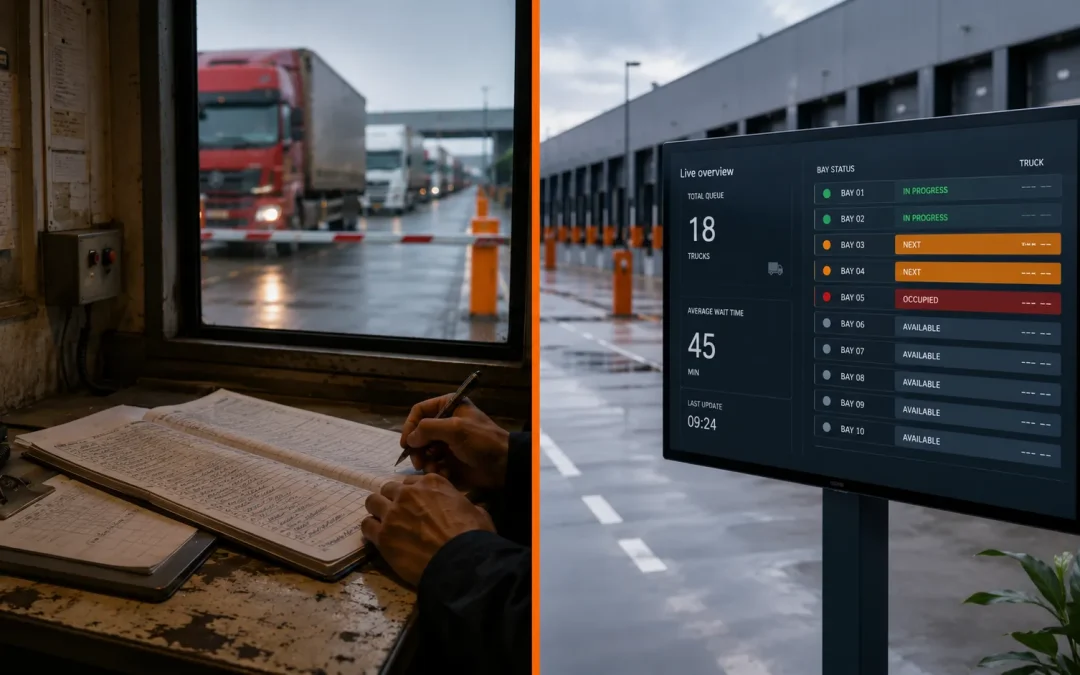
When bay assignment depends on the worker’s current knowledge of the yard situation, errors are inevitable: bays marked as free that are actually occupied, vehicles routed to the same spot, idle time waiting for manual verification. Without real-time data, every assignment is an estimate, not a certainty.
2. Slow or unclear communication with drivers
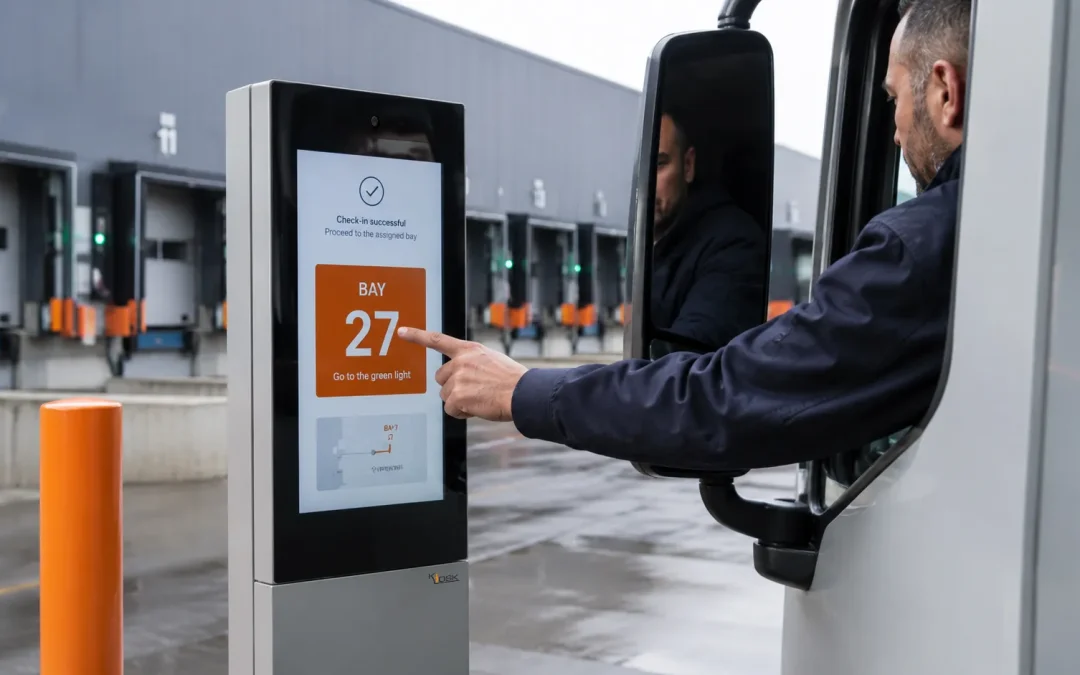
Many drivers don’t speak Italian, and verbal management of instructions slows down every single step, multiplied by dozens of vehicles per day. The multilingual check-in was created precisely to eliminate this bottleneck, but without it, every communication requires additional time and margins of error.
3. Dependence on a single human checkpoint
If the entire flow passes through a single concierge, that single point becomes the maximum speed limit for the entire process. During traffic peaks, or simply during a break, the system stalls or slows down, generating a backlog of waiting vehicles.
4. Lack of historical data for flow planning
Without statistics on peak times, average dwell times, and arrival frequency, it’s impossible to plan ahead: we react to queues instead of preventing them. Data collection is one of the elements that distinguishes a true digital check-in system from simple manual gate management.
5. Check-in process with too many manual steps
Paper signatures, document verification, verbal communication from the bay: every manual step added to check-in increases the time required for each individual vehicle. With large daily volumes, even a few seconds of delay per step translates into significant queues during peak hours.
6. Traditional guarding with an operator
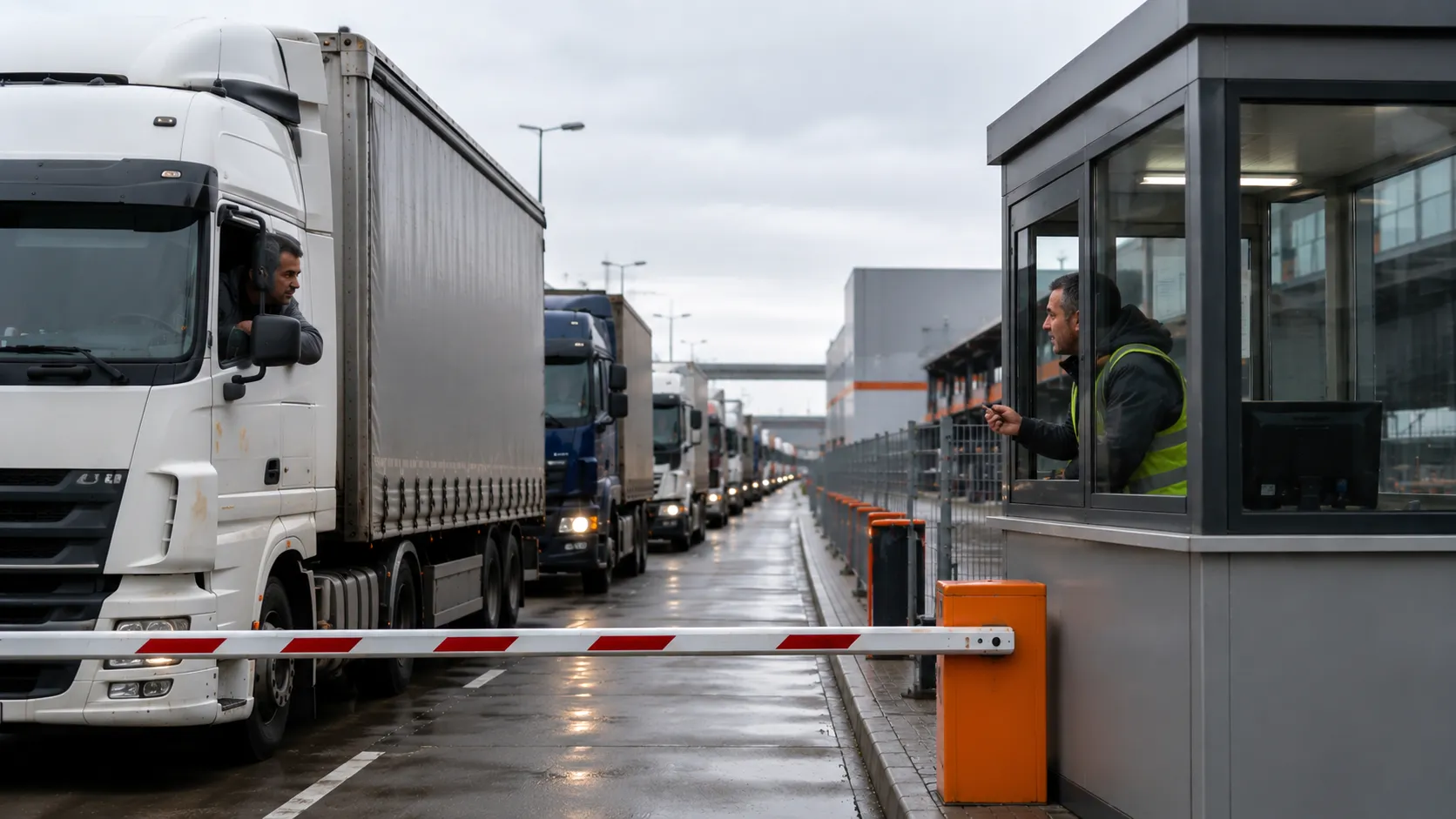
Many facilities still manage entry through a manned guard booth (or guardhouse), where the driver must stop, disembark, and manually fill out documents and verify permits before proceeding to the assigned bay.
This model, while functional, introduces a structural bottleneck: each vehicle requires direct interaction with the operator, and the required time is compounded by the waiting time if the guard is busy with other drivers. During peak traffic periods, this single step alone can generate a queue at the gate, regardless of how efficient the rest of the downstream process is.
How a yard management system eliminates these causes
A digital flow management system addresses all these causes simultaneously: it assigns docks based on real, up-to-date data, manages multilingual communication without human intervention, distributes the workload across multiple automated access points, collects historical data useful for planning, reduces check-in to a few digital steps, and replaces (or complements) traditional security with a self-service kiosk that drivers can use independently, without having to wait for an operator.
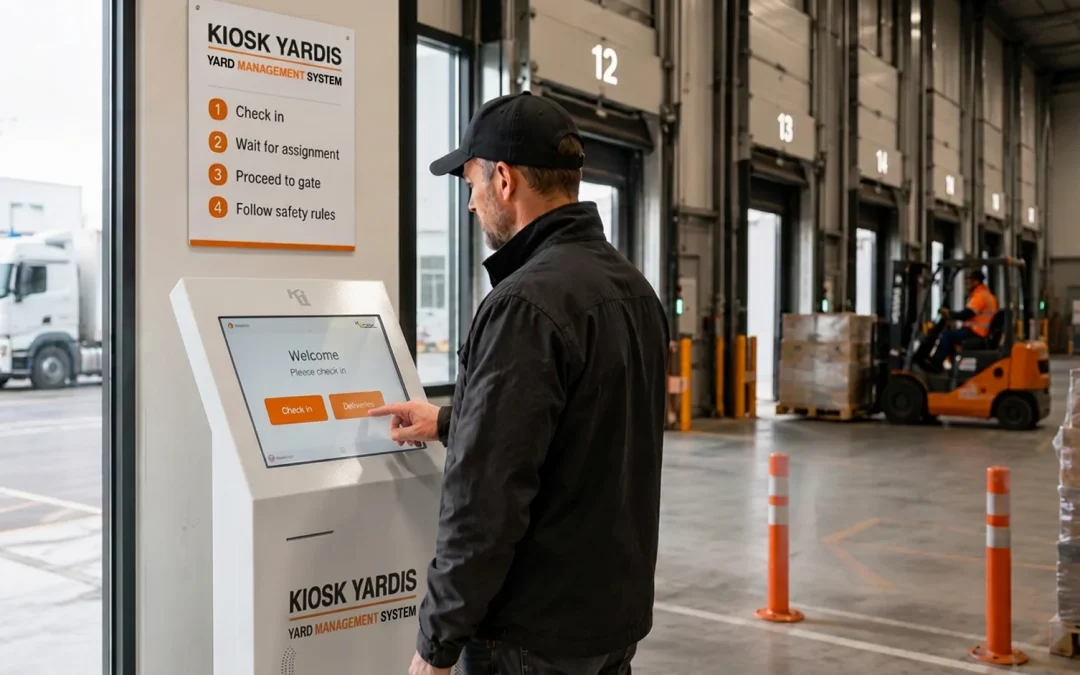
Kiosk Yardis is the software platform that manages this entire process, from automatic dock assignment to a centralized dashboard with real-time statistics, integrated with hardware—vertical or semi-outdoor digital kiosks—chosen based on the operational context of each project.
FAQ
Are queues at the gates always caused by a lack of space?
No, almost never: in most cases, the cause is an unstructured entry and assignment process, not the number of available bays.
Does a digital system completely eliminate queues?
It significantly reduces them by addressing the structural causes, although exceptional traffic peaks can still generate residual queues, but these are managed in a more orderly and predictable way.
Is traditional security always a problem?
Not necessarily: where volumes are low, it can operate without generating queues. It becomes a structural bottleneck when the number of vehicles exceeds the capacity of a single operator to manage them in sequence, especially during peak hours.
Where should you start to reduce check-in lines?
By analyzing existing flow data, when available, and mapping manual steps in the current check-in process, you can understand where the slowdown is concentrated.