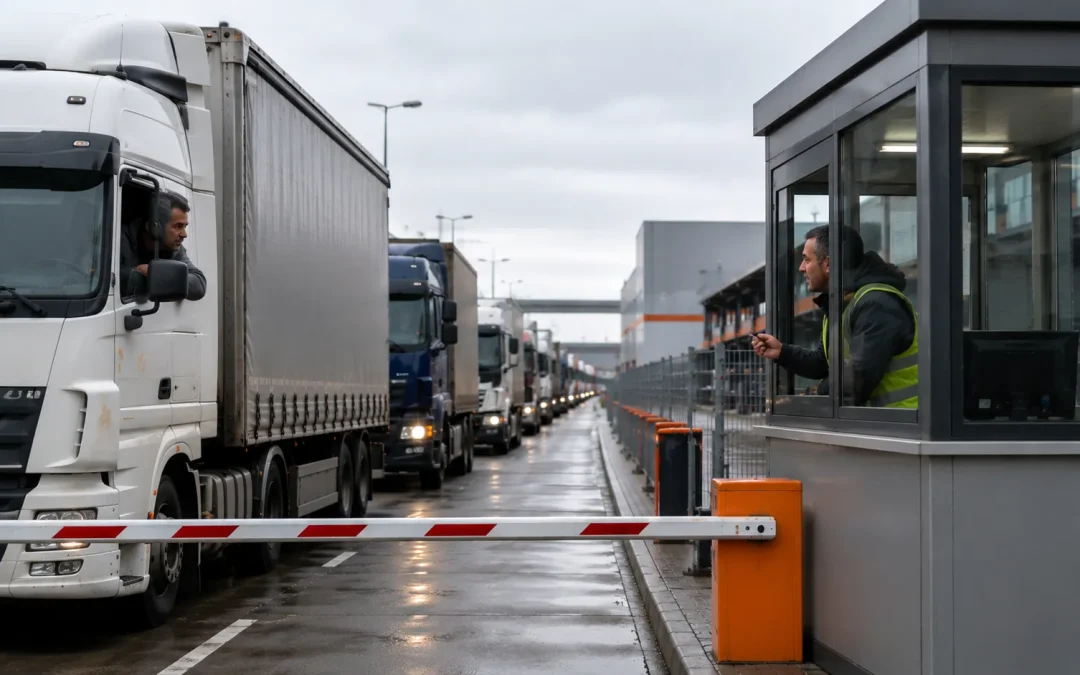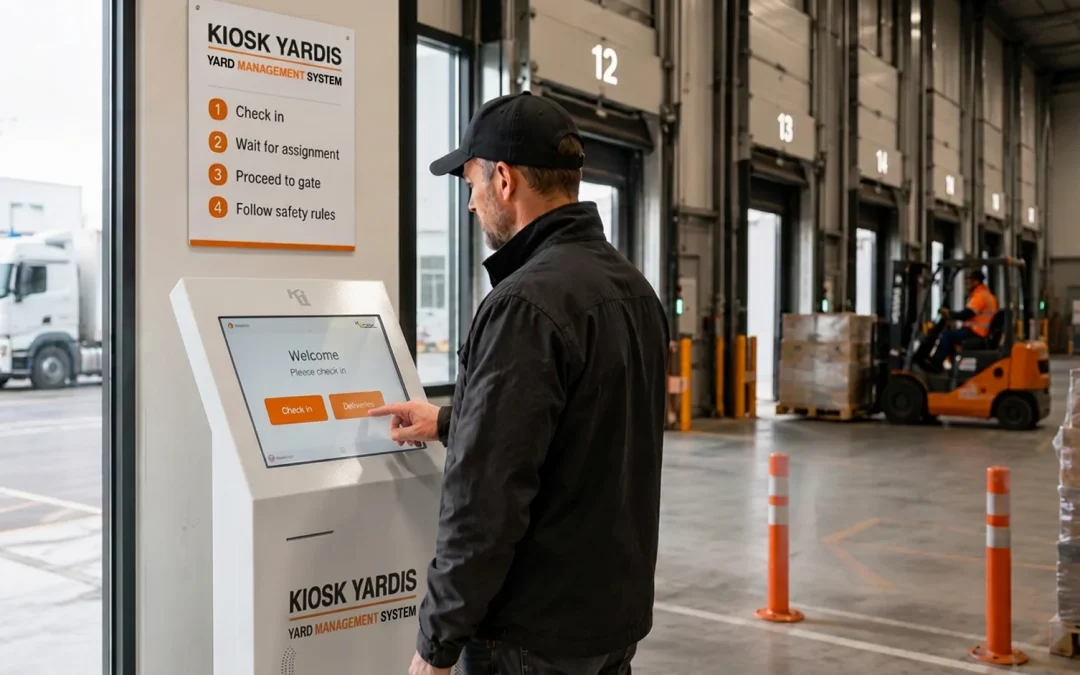
Digital check-in is the first step in a yard management system: it’s the moment when the driver, upon arriving at the facility, is identified and directed to the correct loading or unloading bay, without having to interact with the concierge staff. This is where the system’s efficiency comes into play: a slow or unclear check-in nullifies any subsequent benefits in flow management.
DATA
Digital check-in doesn’t just speed up entry: it improves the entire operational flow. According to industry sources, digitizing yard management can lead to a reduction in waiting times of up to 40%, with a 10% reduction in check-in times and a 15% to 30% increase in throughput at the docks in initial adoption projects.
What is digital check-in in a loading and unloading area?
Digital check-in is the process by which the driver registers upon arrival via an interactive kiosk, providing the necessary information (trip number, supplier, type of goods) to allow the software to automatically assign the most suitable available bay. It replaces manual registration on paper or verbal communication with the concierge.
The phases of digital check-in
- Identification: The driver presents himself at the kiosk and enters or selects his loading/unloading reference.
- Automatic verification: The software checks the correspondence with scheduled appointments or existing reservations.
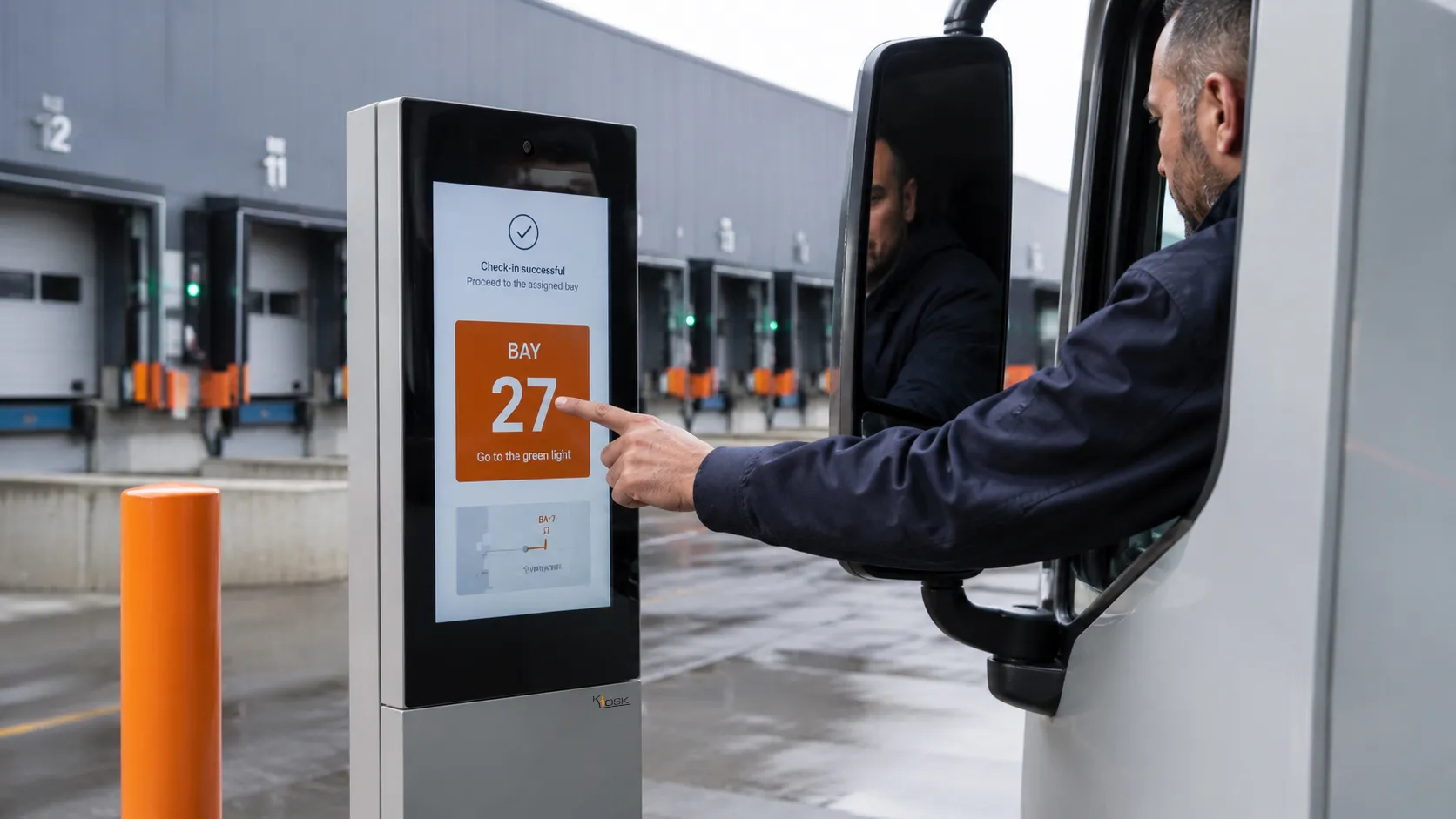
- Bay assignment: Based on real-time availability, the system assigns the most suitable bay.
- Communication to the driver: The kiosk displays the assigned bay and operating instructions, in the driver’s language if the system is multilingual.
- Entry time recording: The software starts counting the waiting time, which is then available in the statistics.
The entire process takes just a few seconds and requires no human intervention in most cases, except in some cases, which are handled directly by the concierge staff.
Why digital check-in reduces errors
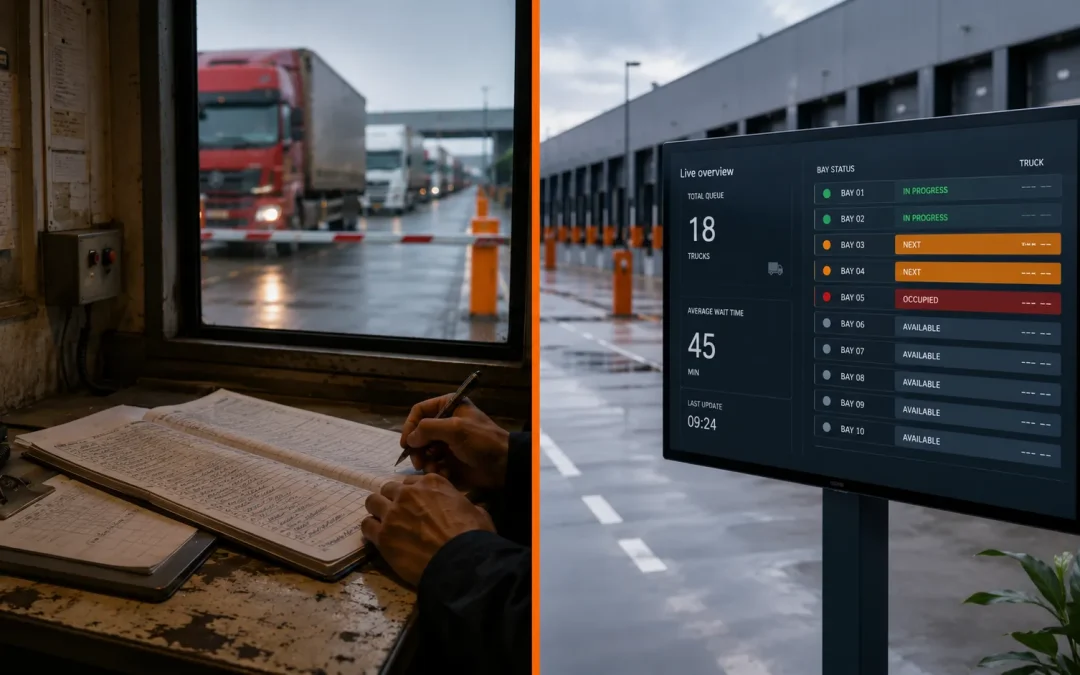
In manual management, bay assignment depends on the operator’s current knowledge of the yard situation: occupied bays, arriving vehicles, and priorities to be respected. This information is constantly changing and, whether handled verbally or on paper, is subject to errors and misalignments.
Digital check-in eliminates this variable: the software knows the status of each bay in real time and assigns based on updated data, not an operator’s estimate. This reduces overlaps, downtime, and rework due to incorrect assignments.
OPERATIONAL INSIGHT
More visibility, fewer errors. A modern yard management system does more than simply assign a dock: it offers real-time visibility into arrivals, departures, dwell times, and asset status, reducing the need for phone calls, paperwork, and manual steps. This approach reduces the risk of human error and makes it easier to intervene when the flow deviates from plan.
What is needed for digital check-in to really work
An effective digital check-in requires the combination of two distinct elements:
- The software, which manages the verification logic, assignment, multilingual communication, and statistics collection
- The hardware kiosk, which must ensure rapid and reliable interaction: a responsive touchscreen, robustness for intensive and continuous use, and—depending on the context—specific models such as vertical kiosks for check-in from the vehicle or semi-outdoor kiosks for semi-outdoor installations
Without hardware suited to the operating context, even the best flow management software risks causing slowdowns precisely at the most delicate point of the process: the first contact between the driver and the system.
INSIGHT
The real lever isn’t just efficiency: it’s the reduction of hidden costs. Yard management and slot planning systems can help reduce detention and demurrage by 20%-30%, as well as improve collaboration with carriers and make operations more predictable. In some cases, the first operational benefits are observed within six months of project launch.
Kiosk Yardis: digital check-in integrated into flow management
Kiosk Yardis manages digital check-in as the first step of an integrated process that includes automatic bay assignment, addressing via displays and indicators, and real-time statistics collection on a centralized multi-location dashboard. The multilingual check-in management is part of the same software platform.
FAQ
How long does digital check-in take compared to manual check-in?
Digital check-in typically takes a few seconds, compared to variable and often longer times than manual registration, subject to the availability of the concierge staff.
Does digital check-in require driver training?
No, the interface is designed to be intuitive and guide the driver step by step, even without previous experience with the system.
What happens if a driver does not have a registered loading/unloading reference?
The system reports the anomaly and routes the case to the concierge staff for manual verification, without blocking the flow of other check-ins.