In Italian warehouses and logistics hubs, most of the drivers who show up at the loading and unloading docks do not speak Italian. A multilingual check-in allows these drivers to complete the registration independently, in their own language, without requiring the intervention of the concierge staff.
It is the management software – not the totem itself – that makes this experience possible: the totem is the hardware that hosts the interaction, while it is the software platform that manages languages, assignment logic and communication with the driver.
It is one of the elements that makes the difference between a truly effective yard management system and one that simply moves the problem of the queue from the gate to the totem.
The problem of communicating with foreign drivers
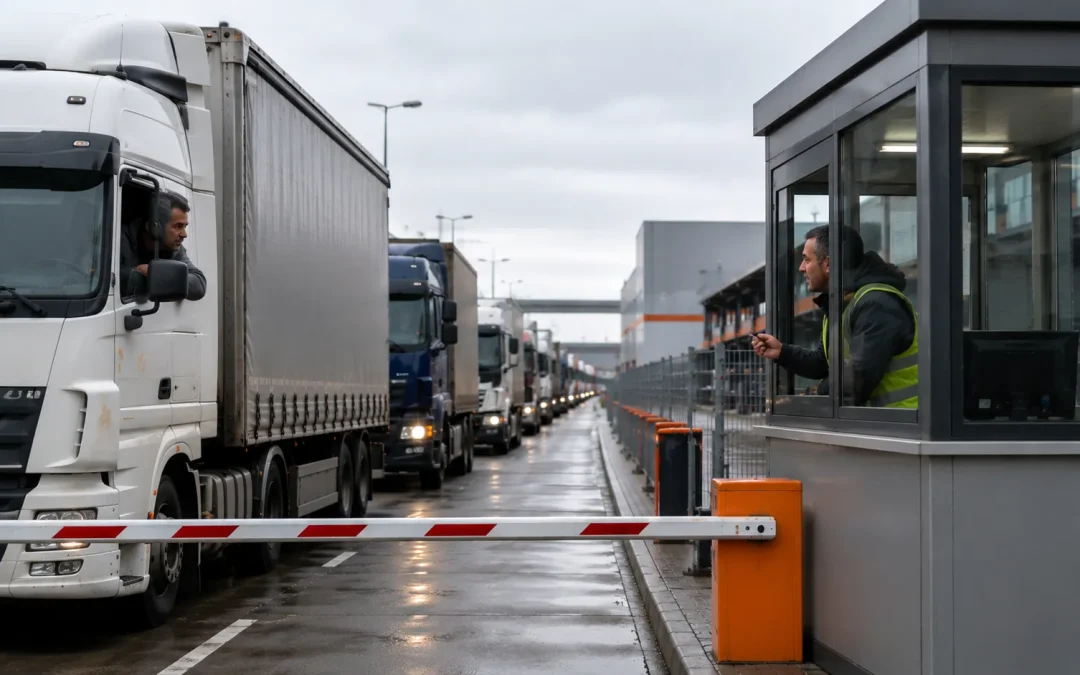
The manual management of loading and unloading bays is almost always based on direct interaction between the concierge attendant and the driver. When the driver does not speak Italian, this generates:
- Longer waiting times to explain required procedures and documents
- Misunderstanding of timetables, assigned bays or safety rules
- Need for staff with specific language skills, not always available on every shift
- Operational stress, especially during peak traffic times
These problems multiply in warehouses with a high turnover of foreign transporters, where the same procedure must be repeated dozens of times a day with drivers of different nationalities.
How multilingual check-in works: the role of the software
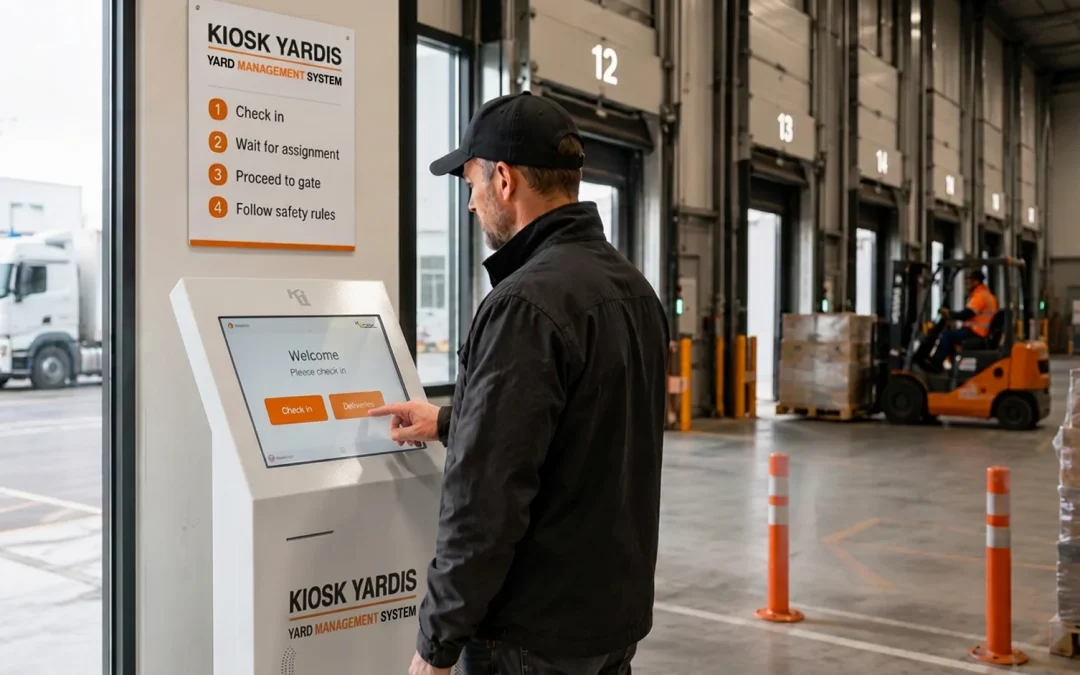
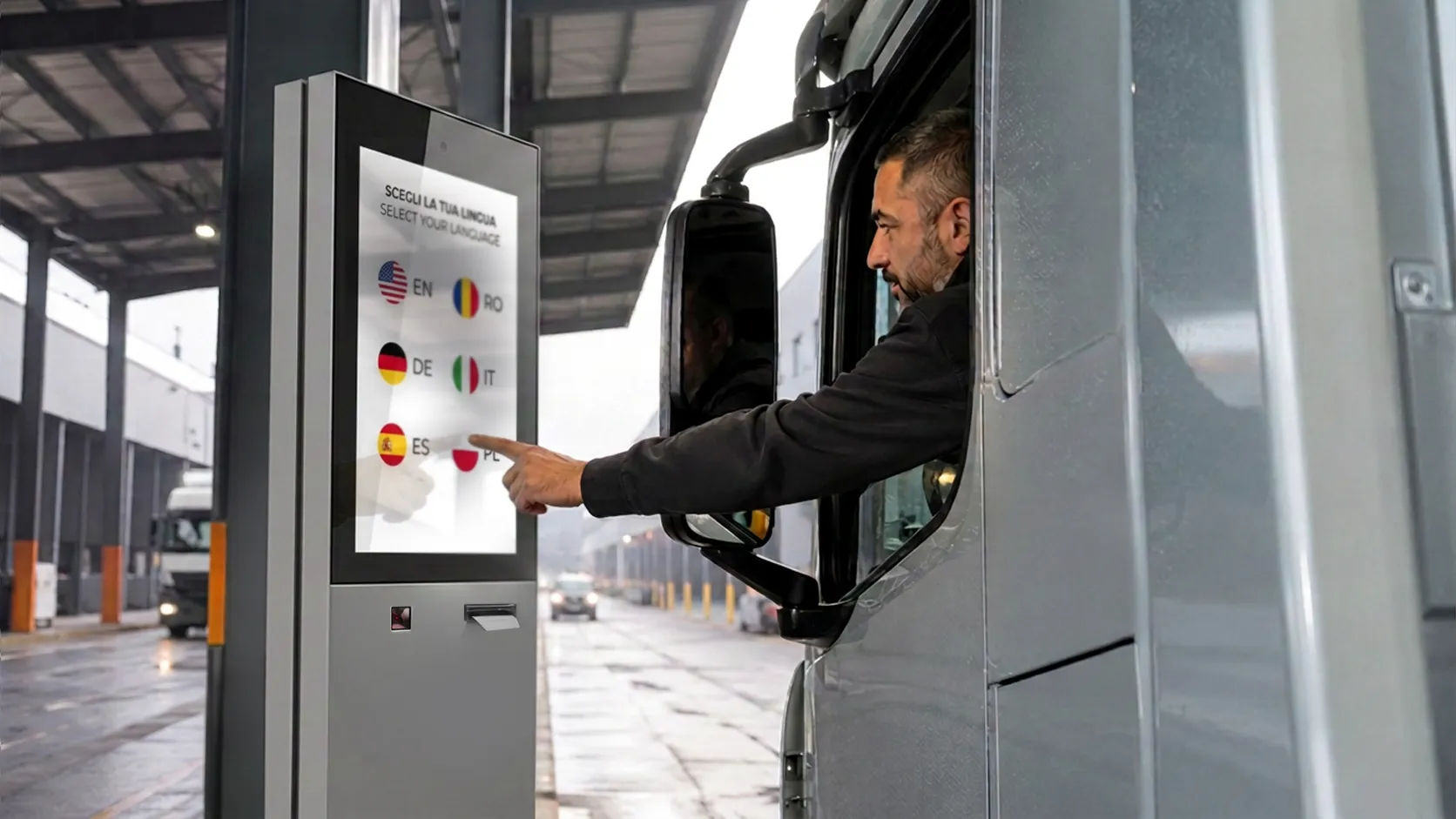
Upon first login, the software presents the driver with a language selection. From that moment, the entire check-in process — identification, loading/unloading reference indication, safety instructions, bay assignment — is shown in the chosen language, without the need for an interpreter or a bilingual operator.
It is the application platform, such as Kiosk Yardis, that governs this logic: the totem simply provides the screen, touch input and connectivity, while all the multilingual intelligence resides in the software.
The system can also include visual indications (icons, floor plans, color codes) that further reduce the dependency on text, useful when the driver’s language is not among those available in the system.
Why it’s crucial, not just convenient
A multilingual totem isn’t just a convenience for the driver: it has a direct impact on the company’s operational efficiency.
- Reduces dwell time: The driver completes check-in without waiting for an available interpreter.
- Eliminates assignment errors: Instructions are clear and correctly understood the first time.
- Frees concierge staff from repetitive translation tasks, allowing them to focus on higher-value activities.
- Improves safety: Safety instructions in the driver’s language reduce the risk of misconduct in the loading area.
- Strengthens the company’s image in the eyes of international carriers and freight forwarders.
The right hardware for intensive, 24-hour use
While the software governs the multilingual logic, it is the kiosk’s hardware that determines the system’s reliability over time. In a loading and unloading area, the kiosk is exposed to continuous use, often around the clock, with demanding operating conditions: frequent handling by different drivers, exposure to dust, humidity, temperature fluctuations, and, in many cases, outdoor or semi-outdoor environments.
For this reason, the choice of kiosk must take into account specific requirements for robustness and stability: a structure resistant to shock and intensive use, components sized to operate without interruption over long shifts, and a touchscreen suitable for frequent and not always delicate use.
When installing in semi-outdoor areas—under canopies, near platforms, or exposed to partial weather—the choice falls on semi-outdoor models like Kiosk Lite, designed to withstand these conditions while maintaining the interactivity required for check-in.
Kiosk tailors these aspects on a case-by-case basis based on the customer’s operating context, as part of the installation and commissioning projects.
Check-in directly from the vehicle: when a vertical kiosk is needed
In some contexts, the goal is not only to speed up check-in, but also to avoid the driver having to get off the vehicle to interact with the system. In these cases, vertical totems are used that are taller than models like Kiosk One or Kiosk One Small—for example, solutions like the Kiosk Nice—designed to ensure interactivity and screen readability even from the cockpit of a truck or van.
This too is a choice that must be tailored to the specific project: the height of the totem, its positioning relative to the transit lane, and the type of vehicles accessing the facility are variables that Kiosk evaluates with the client during the on-site inspection to ensure that check-in can be used without leaving the vehicle.
Multilingual totem and centralized management: the winning combination
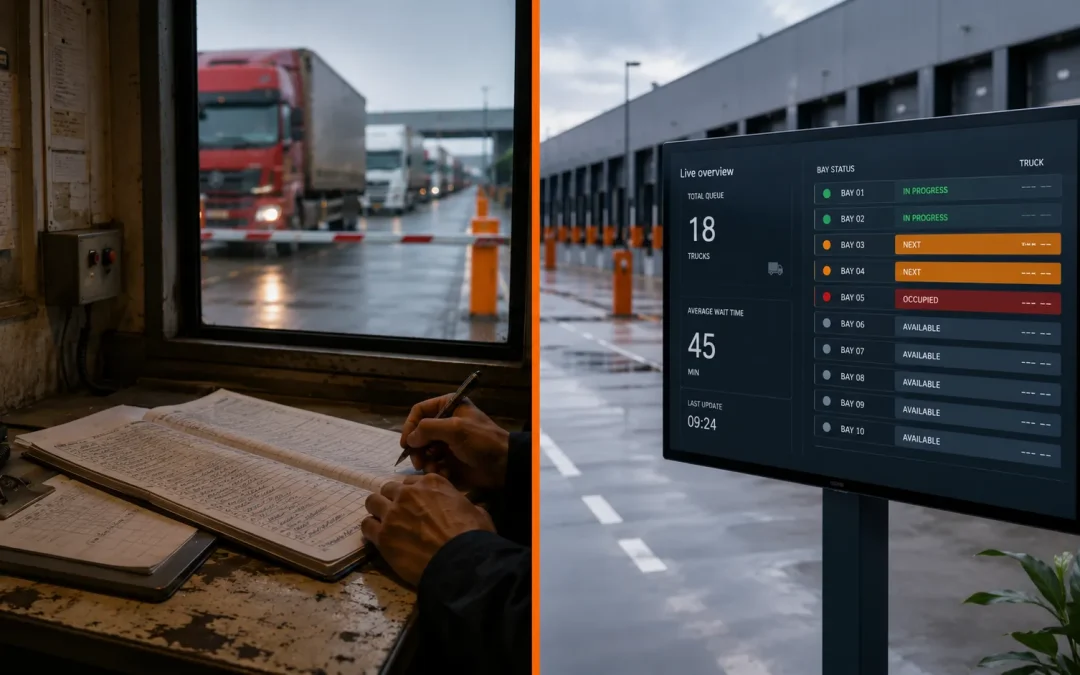
The true value of the multilingual totem emerges when it is integrated into a broader loading and unloading flow management system: the multilingual check-in directly feeds the automatic assignment of bays and the monitoring dashboard, eliminating intermediate manual steps that could reintroduce errors or delays.
Kiosk Yardis is the software that manages the multilingual check-in logic as part of the loading and unloading bay access management platform, along with automatic station assignment, summary displays, and a centralized multi-site dashboard. The hardware—from countertop kiosks to vertical models for vehicle check-in—is selected and configured on a case-by-case basis by Kiosk based on the customer’s operational context.
FAQ
Why do you need a multilingual kiosk if staff already manage queues?
Manual management with interpreters or bilingual staff is not scalable: it depends on the availability of specific people for each shift and lengthens wait times during peak traffic hours.
What languages can a multilingual kiosk handle?
The number of languages can be configured based on the facility’s needs and the predominant origin of the transporters who regularly operate at that site.
Does a multilingual kiosk completely replace the concierge staff?
No, it reduces the burden on repetitive check-in and translation tasks, leaving the staff to manage non-standard situations and security.
What features should the totem hardware have in a loading and unloading area?
It must be robust and stable, capable of withstanding intensive and continuous use, even over long shifts and in challenging operating conditions such as dust, humidity, and temperature fluctuations.
What changes if the totem is installed in a semi-outdoor area?
A semi-outdoor model, like the Kiosk Light, is needed, designed to withstand partial exposure to the elements without sacrificing the interactivity required for check-in.
When is a vertical totem needed instead of a countertop model?
When the goal is to allow check-in directly from the vehicle, without the driver having to disembark: a vertical totem, taller than countertop models, ensures readability and interactivity even from the passenger compartment.